
The Learner and the Builder
A morning with Mark Roberge and a roomful of CROs. An afternoon hacking agentic AI for a charity. What AI actually demands of the people who want to matter.

With Mark Roberge at the GTM Leader Society Sales Leader Breakfast. April 29, 2026, San Francisco.
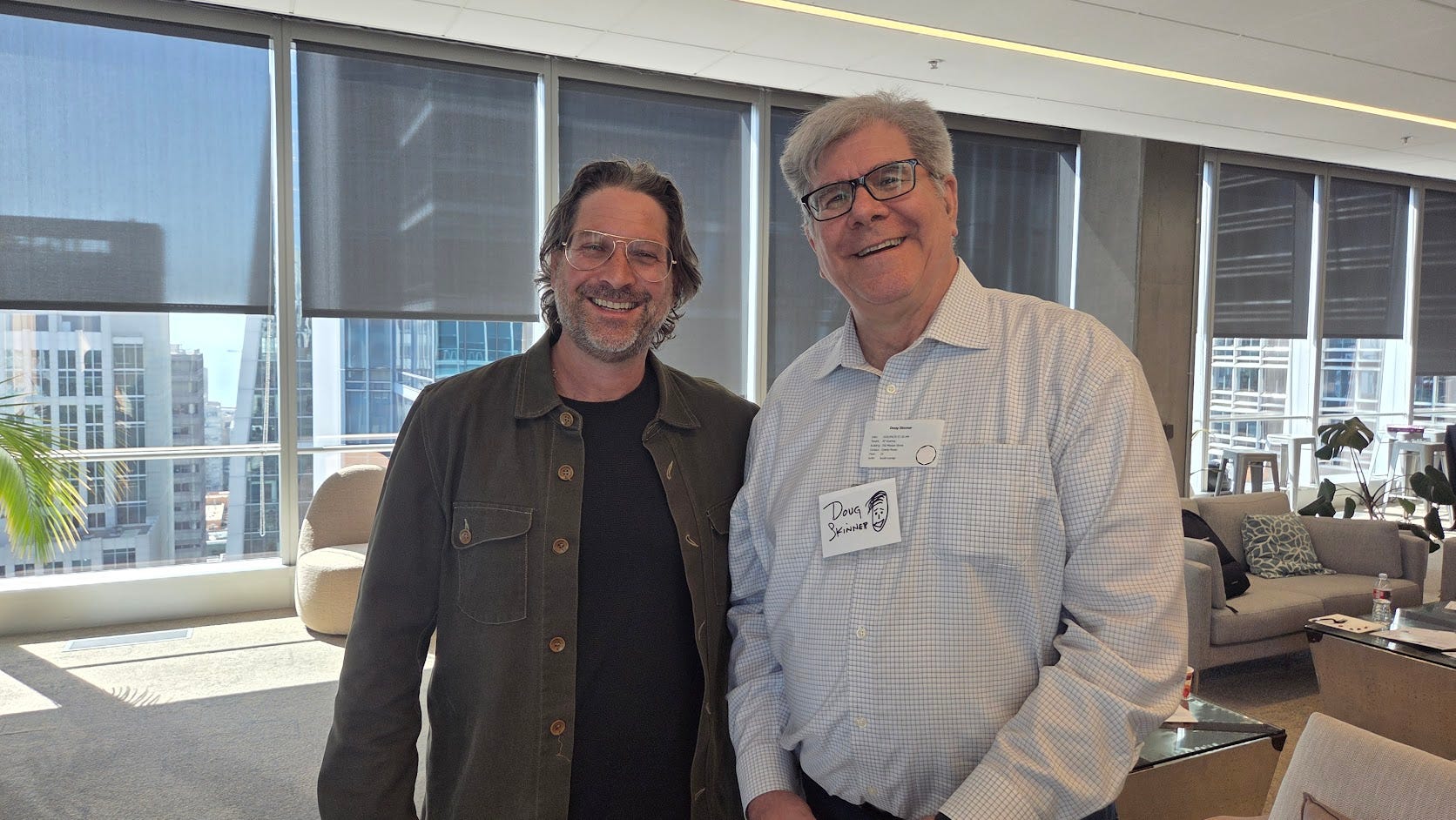
Yesterday was one of those days where I could feel two different parts of myself lighting up nearly at the same time.
The learner.
And the builder.
Not the imposter LinkedIn version of those words.
Not “lifelong learner” as a personality bumper sticker.
Not “builder” as a way to cosplay startup energy.
I mean the actual thing.
The part of me that wants to sit in a room, listen hard, absorb patterns, ask better questions, and understand how people who have done the thing actually think.
And the part of me that wants to take a messy, real-world problem and start sketching architecture on the back of a napkin until something useful begins to appear.
Yesterday I got both.
And I loved it.
Morning. The learner room.
I started the day at the GTM Leader Society, hosted at Kearney by AJ Gandhi, Madeline Wallace, and Scott Edmonds, for the book launch of Mark Roberge’s The Science of Scaling. The room was full of CROs and GTM operators.
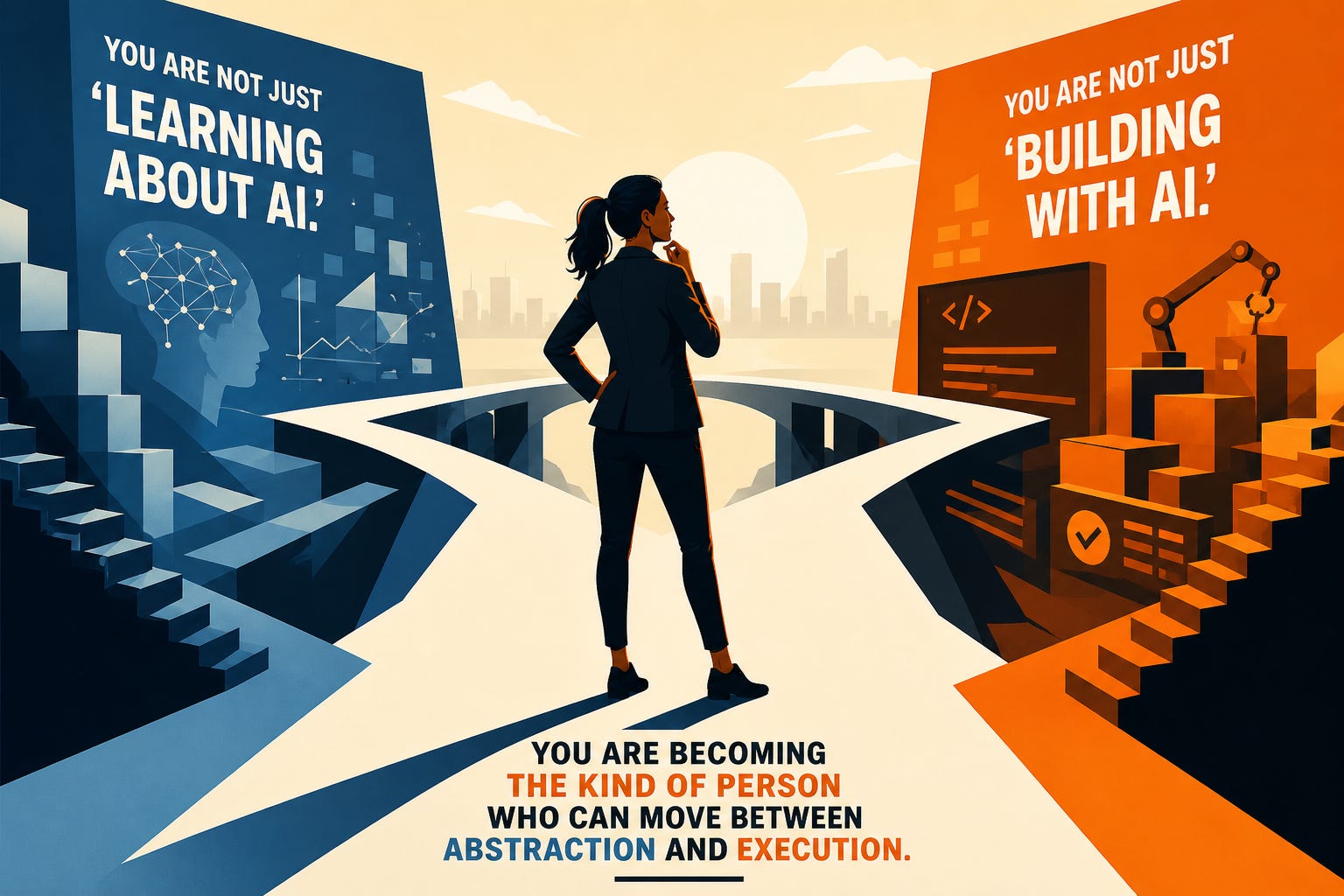
You are not just “learning about AI.” You are not just “building with AI.” You are becoming the kind of person who can move between abstraction and execution.
Different room from what would come later in the day.
Different energy.
Same underlying question.
How do you take something that is working and scale it without breaking it?
Roberge’s argument runs straight through it.
Product-market fit. Then go-to-market fit. Then growth and moat.
Three sequenced stages.
Each one earned, not assumed.
Each one measured, not felt.
Roberge walking the room through “The GTM System.” A reminder that scale is not a vibe. It is an architecture.
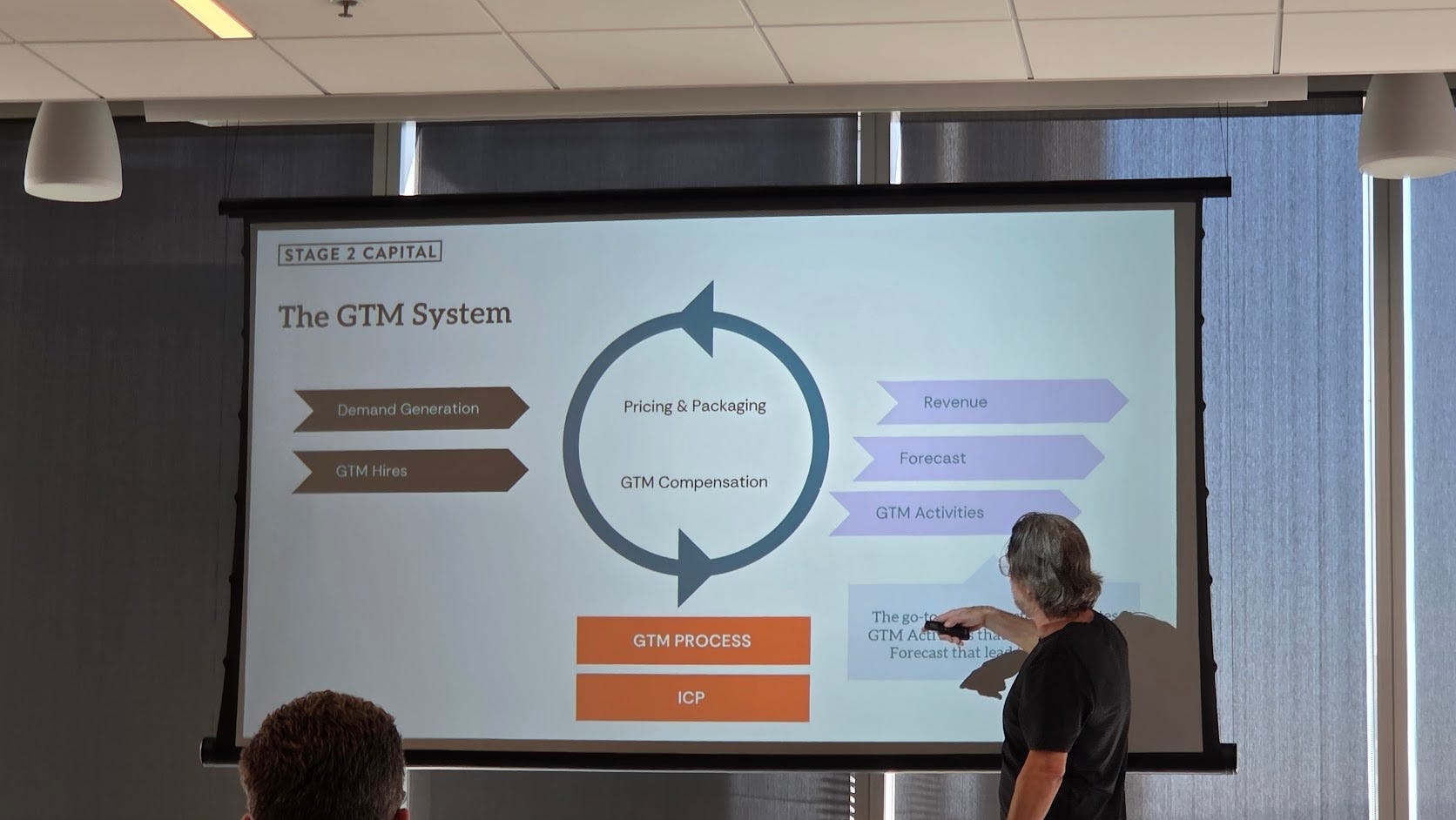
The discussion had this lively Harvard Business School lecture feel to it.
Not passive.
Not fluffy.
Actual GTM operators debating concepts that matter:
What breaks as companies scale.
How revenue systems mature.
How CROs think about repeatability.
How leaders separate signal from noise.
How go-to-market stops being heroics and starts becoming science.
“The Science of Scaling.” A small wink from the universe. The entrepreneur Roberge profiles in his introduction is also named Doug.
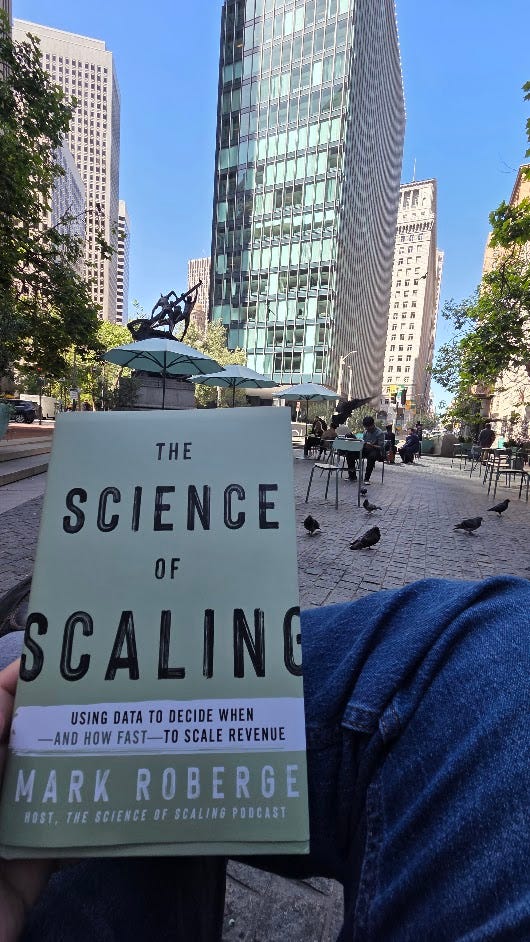
I cracked it open right after the breakfast.
Roberge’s introduction profiles an entrepreneur. Coincidentally also named Doug.
I will take that as a sign to keep going.
Afternoon. The build room.
Then the day flipped.
I crossed town to a builder community event called the Agentic AI Ideation Challenge, hosted by the UiPath Community.
The Agentic AI Ideation Challenge. Hosted by UiPath Community in San Francisco. April 29, 2026.
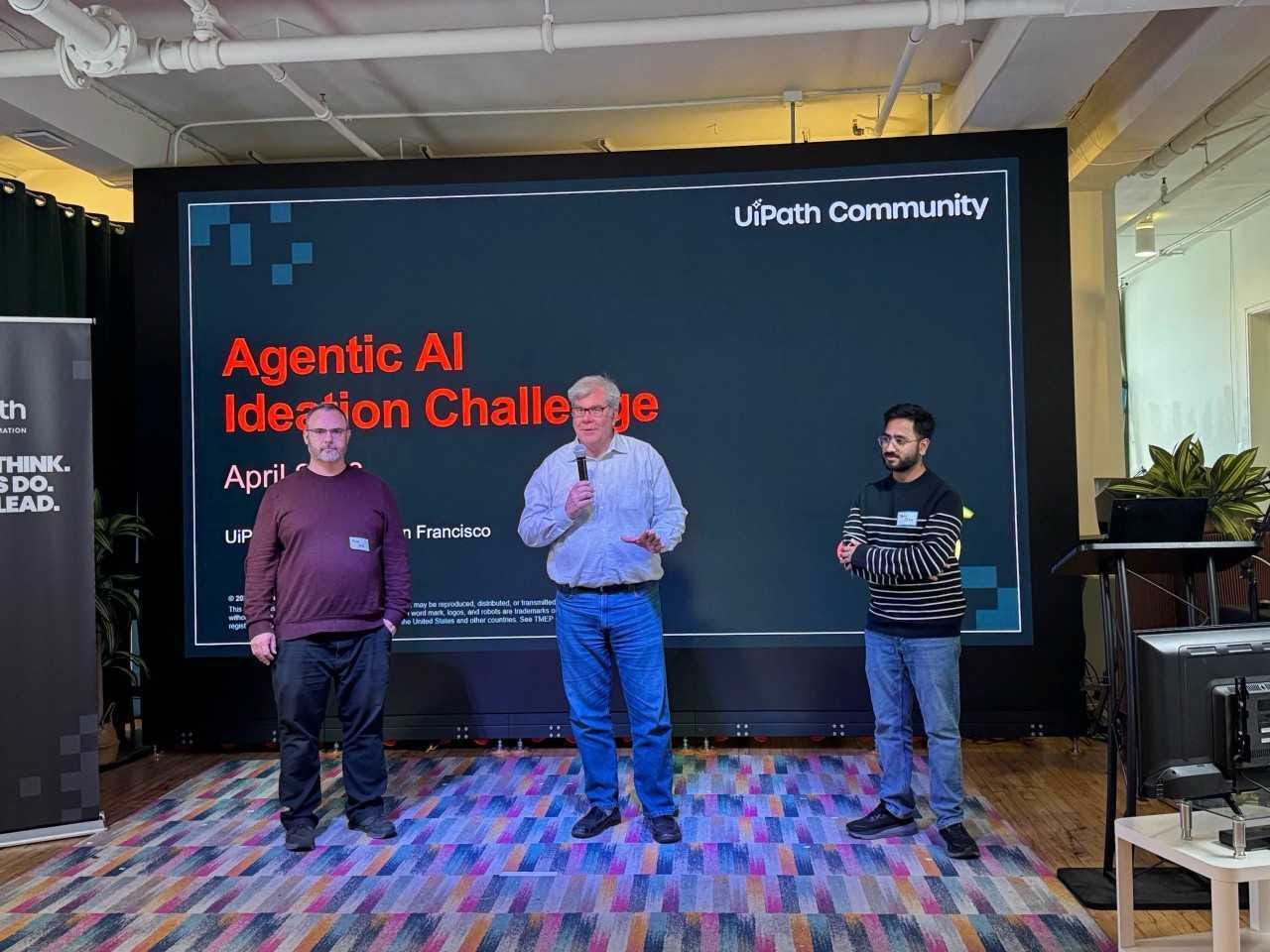
The premise was simple. Take a real use case. Apply agentic AI thinking. Design something that could actually matter.
Not a toy.
Not another “AI assistant for your inbox.”
Not another wrapper pretending to be a company.
A real operating problem.
Our use case was a charity that needed help transitioning its development department and core case management functions into a more modern operating model.
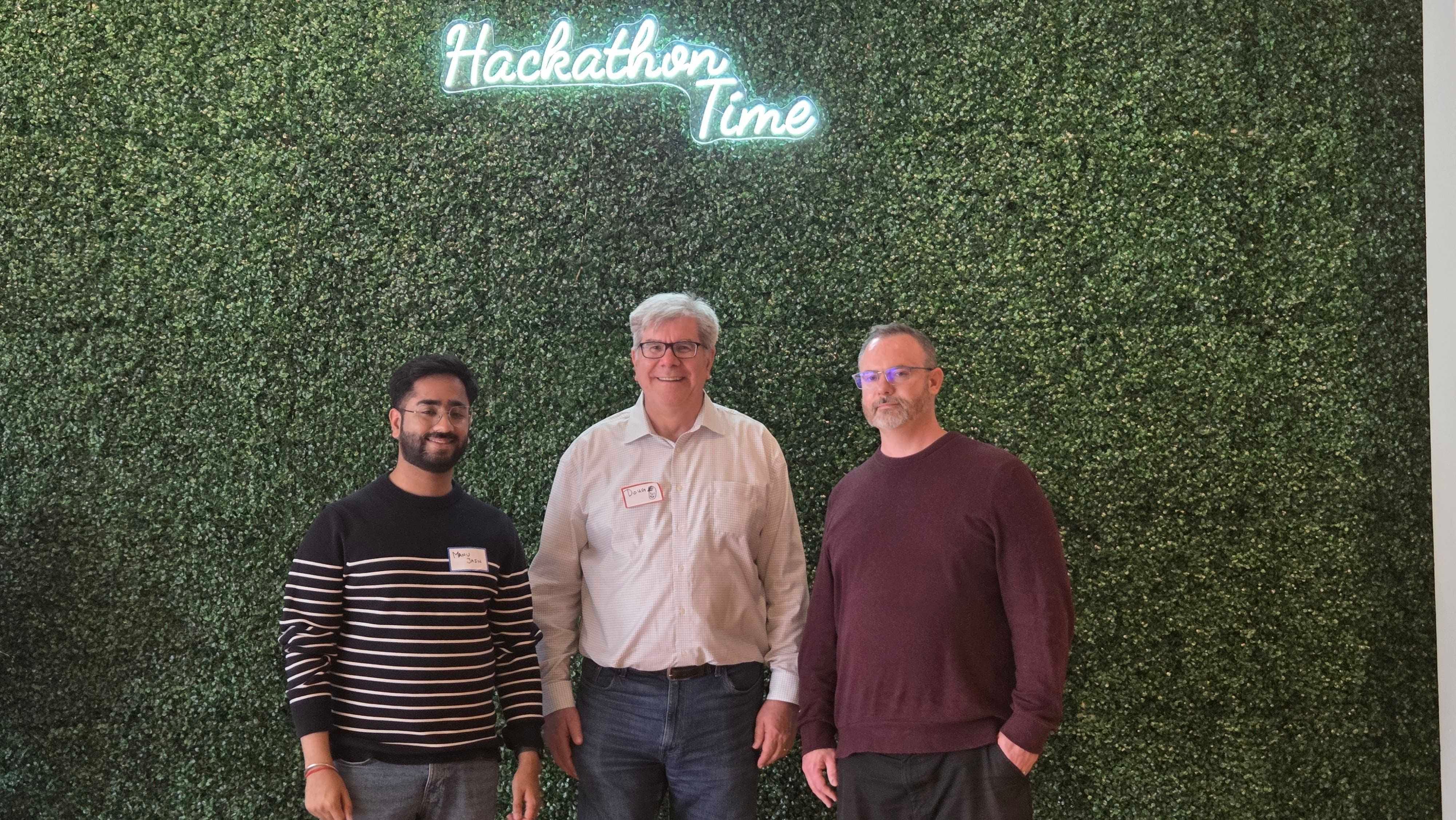
I worked the problem with two engineers, Manu and Philip.
Three people. One whiteboard. A few hours.
Hack team. Manu, me, Philip. Three people, one whiteboard, a few hours, a real problem.
And immediately, the builder part of my brain went nuts.
Because this is where AI gets interesting.
Not when it writes another mediocre paragraph.
When it starts touching the actual nervous system of an organization.
Externally, we explored architecture for outward-facing workloads.
Listening agents monitoring social media feeds.
Sentiment indicators layered onto demographic and firmographic data.
Prediction patterns around future benefactors and donors.
Models that could help the organization understand who might give, why they might give, when they might give, and what signals suggested deeper alignment with the mission.
That’s not “automation.”
That’s organizational awareness.
Internally, the work was even more important.
Enhancing governance.
Improving security.
Designing better access controls.
Supporting rigorous, compliant case management.
Creating smoother volunteer onboarding workflows.
Building systems that could help people do sensitive human work with more clarity, consistency, and trust.
And because this was not some fantasy whiteboard exercise, we also had to think about how it would be tested.
Scalability.
Agentic AI Unit Economics.
Resilience.
Security.
The boring words that separate a demo from something that can actually survive contact with reality.
That is the builder high.
Taking ambiguity and forcing it into shape.
Taking a real human institution with constraints and history and risk and saying:
“Okay. What would actually make this better?”
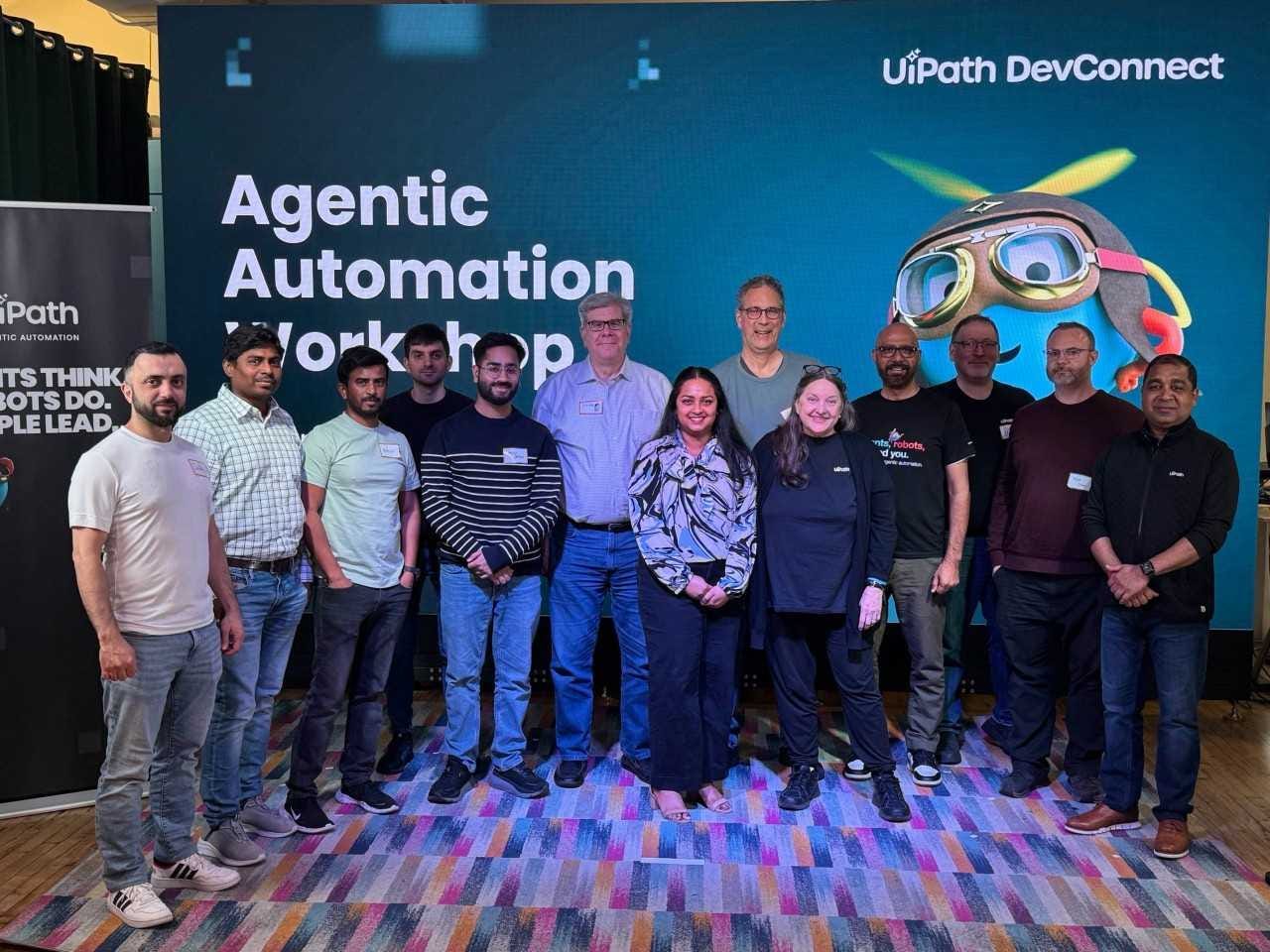
Some of the Agentic Ideation Challenge crew. Builders, hosts, and the UiPath team that ran the room.
The two rooms were closer than they looked.
There is a quiet thread connecting the two events.
And I kept thinking about how rare it is to spend one day in both modes.
In one room, I was learning backward from pattern recognition.
In the other, I was building forward from first principles.
One part of the day was:
“Here are the patterns from people who have scaled. Understand the system.”
The other was:
“Here is a messy problem. Design the system.”
And the more I build, the more I realize those are not separate muscles.
They are the same muscle trained from opposite directions.
Naval Ravikant calls the builder side specific knowledge.
The kind that cannot be taught, only learned. Built up by following real curiosity into real work, then getting feedback from reality.
Roberge calls the learner side earned scale.
The kind that cannot be assumed, only proven. Built up by hitting metrics that say a system is ready for the next stage.
Two different vocabularies. Same instinct.
Both refuse the shortcut.
The learner makes the builder less reckless.
The builder makes the learner less theoretical.
The learner asks:
“What has already been proven?”
The builder asks:
“What can we make true now?”
The learner studies the map.
The builder walks into the fog.
The learner respects accumulated wisdom.
The builder knows wisdom does not matter until it survives implementation.
And honestly, I think this is the zone I want to live in.
Not just consuming.
Not just executing.
Both.
Learning enough to see the deeper pattern.
Building enough to earn the lesson.
Because the world does not need more people with opinions about AI.
It does not need more people summarizing trends.
It does not need more people standing on the sidelines saying “agentic workflows” like it is a magic spell.
It needs people who can sit with a charity’s operational pain and imagine a better system.
It needs people who can understand the science of scaling and still remember that every scaled system started as a fragile little experiment.
It needs people who can move between the seminar room and the build room.
Between theory and architecture.
Between curiosity and execution.
Between learning and shipping.
Yesterday reminded me that I am happiest when both parts are awake.
The learner in me wants to understand what is changing.
The builder in me wants to participate in the change.
And the best days are the ones where I get to do both.